Meta Description

Explore Apple A-Series processor architecture in depth, including Apple’s custom Arm CPU cores, performance and efficiency cores, Apple GPU, hardware ray tracing, Neural Engine, GPU Neural Accelerators, AI and Apple Intelligence, Core ML, ISP, computational photography, media engines, Secure Enclave, memory architecture, power efficiency, semiconductor manufacturing, A-Series generations, A17 Pro, A18 Pro, A19 Pro and comparisons with Snapdragon, Exynos, Dimensity, Tensor, Intel Core and AMD Ryzen.

In One Sentence

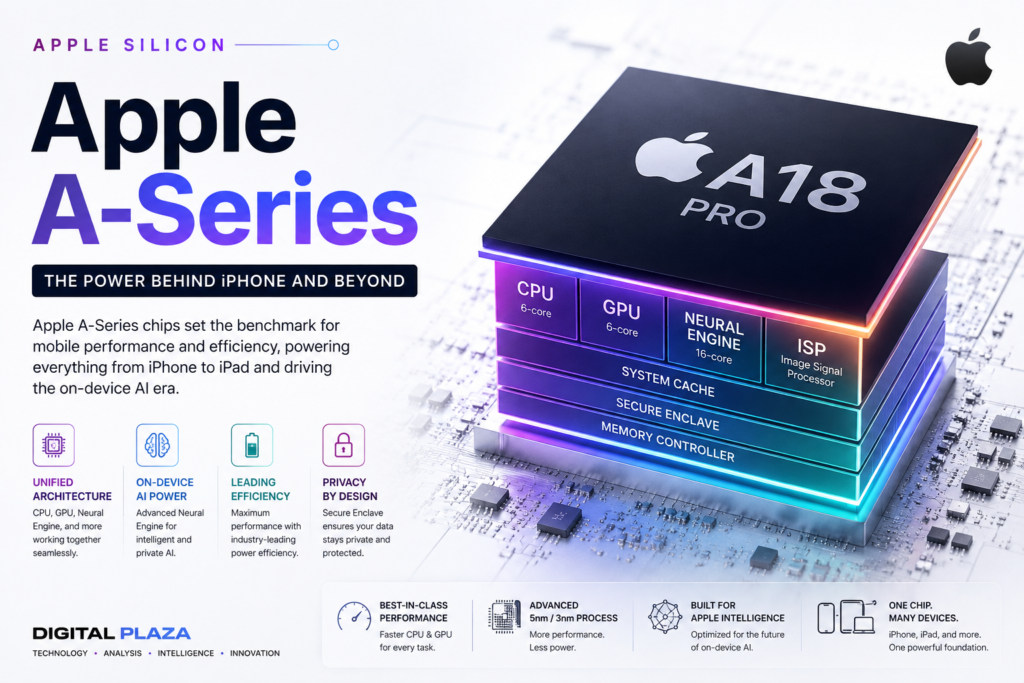
Apple A-Series is Apple’s family of custom Arm-based mobile system-on-chips, combining high-performance and efficiency CPU cores, Apple-designed GPU architecture, Neural Engine and AI acceleration, image processing, media engines, security, memory and power-management technologies into a tightly integrated platform for iPhone and other Apple devices.

1. What Is Apple A-Series?

The Apple A-Series is Apple’s family of custom-designed mobile processors used primarily in the iPhone and related Apple products.

Unlike a conventional standalone CPU, an A-Series chip is a System-on-Chip (SoC) integrating multiple specialized processing engines.

A modern A-Series platform can combine:

  • CPU
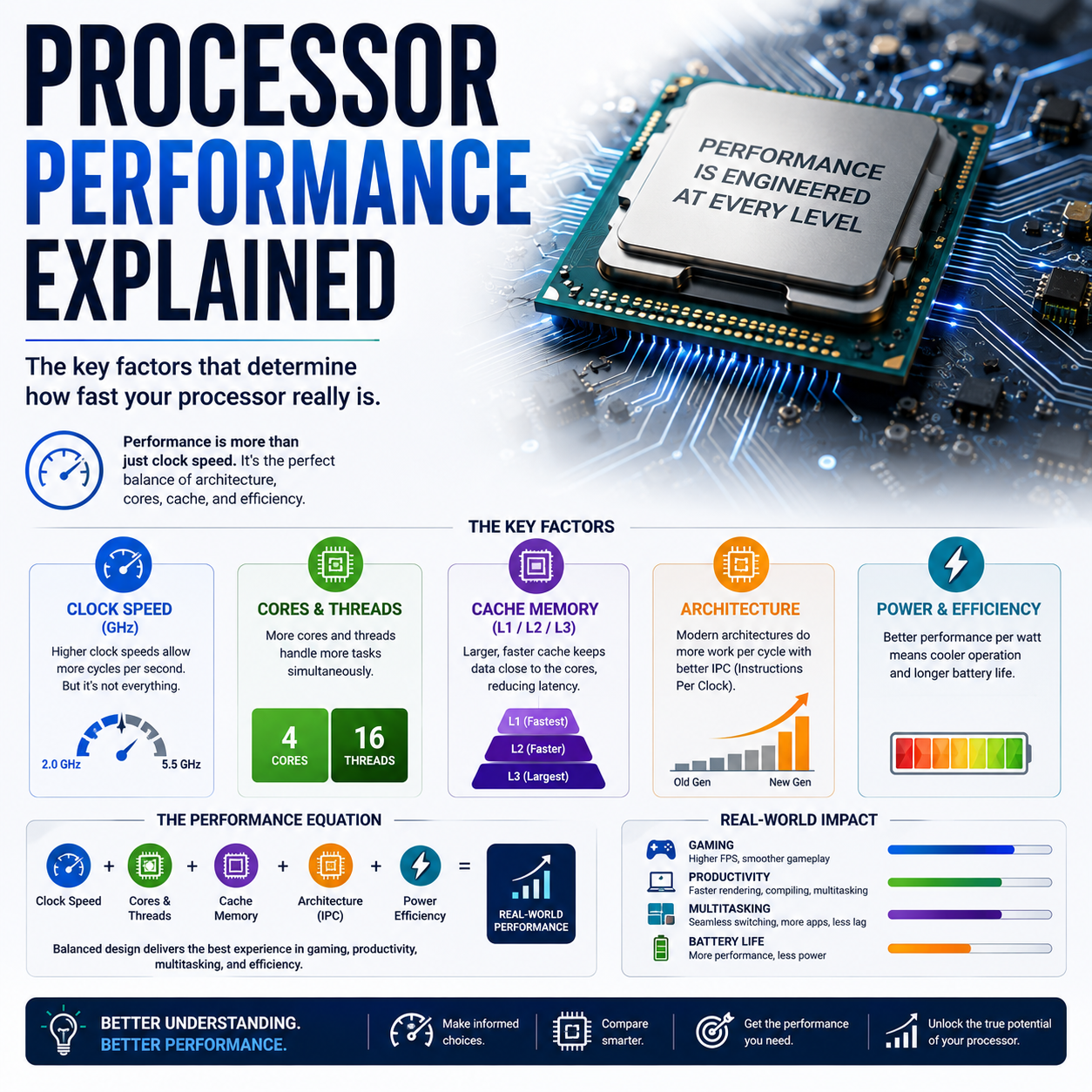
  • GPU
  • Neural Engine
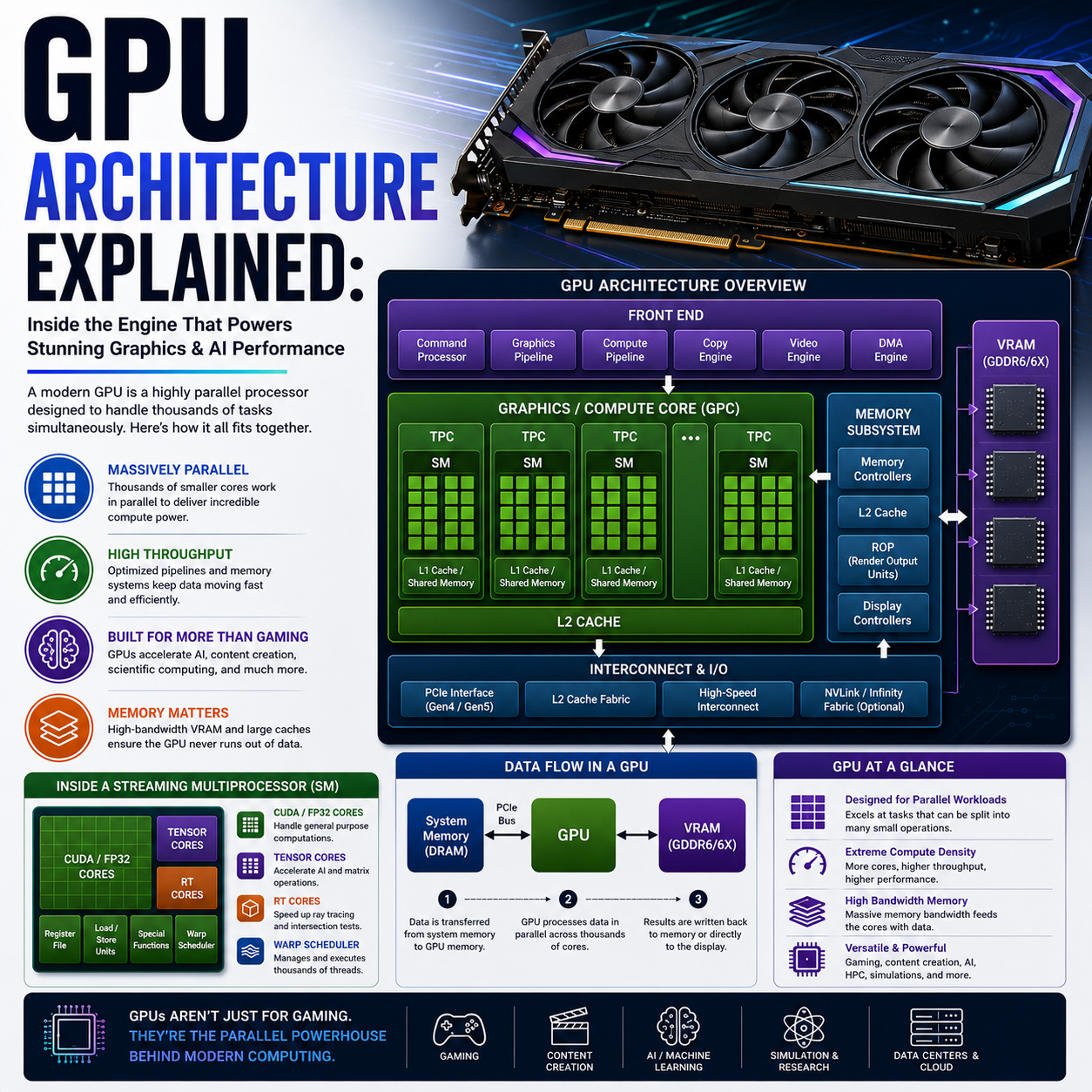
  • Image Signal Processor
  • Media engines
  • Memory subsystem
  • Secure Enclave
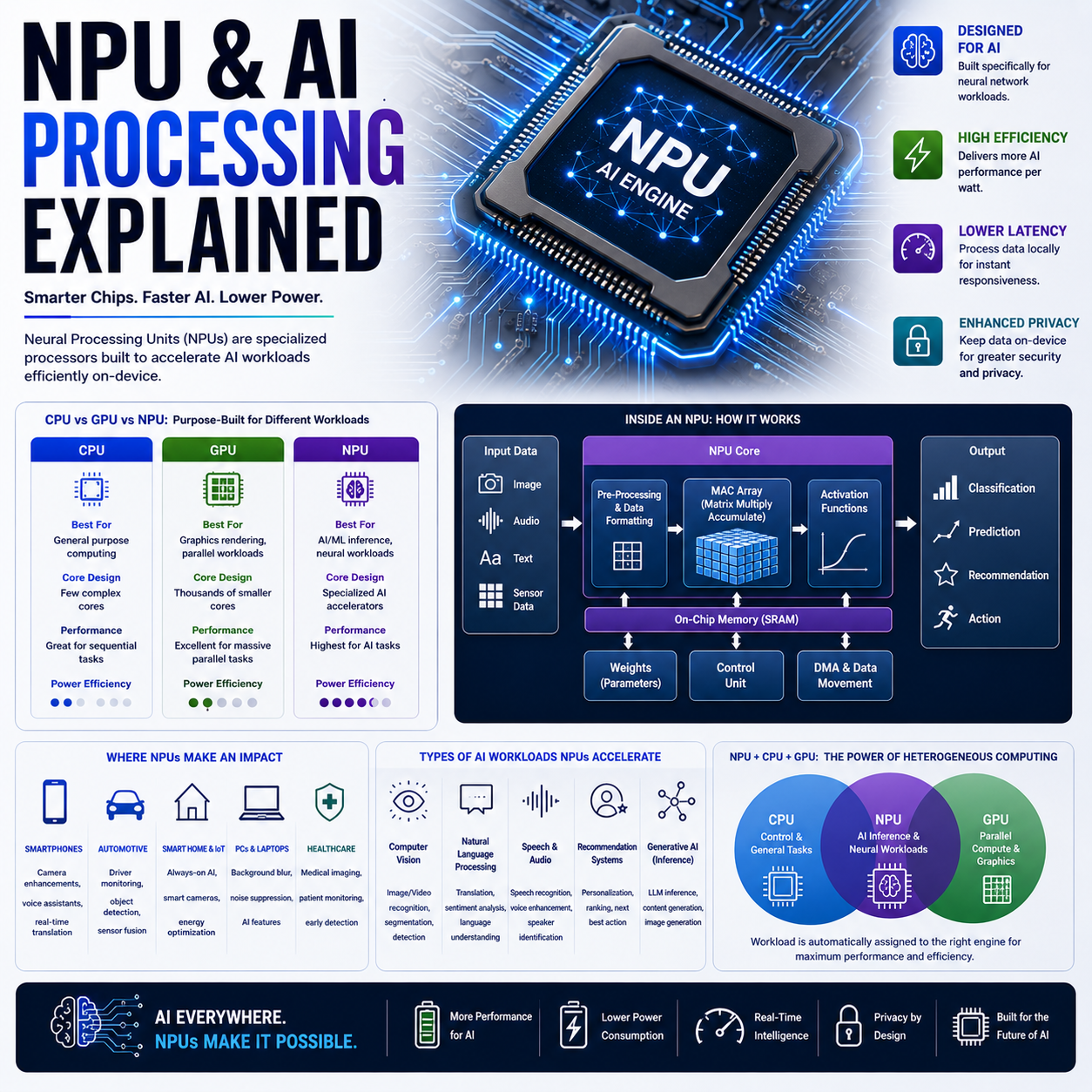
  • Display processing
  • Video processing
  • Power-management technologies

The architecture can therefore be represented as:

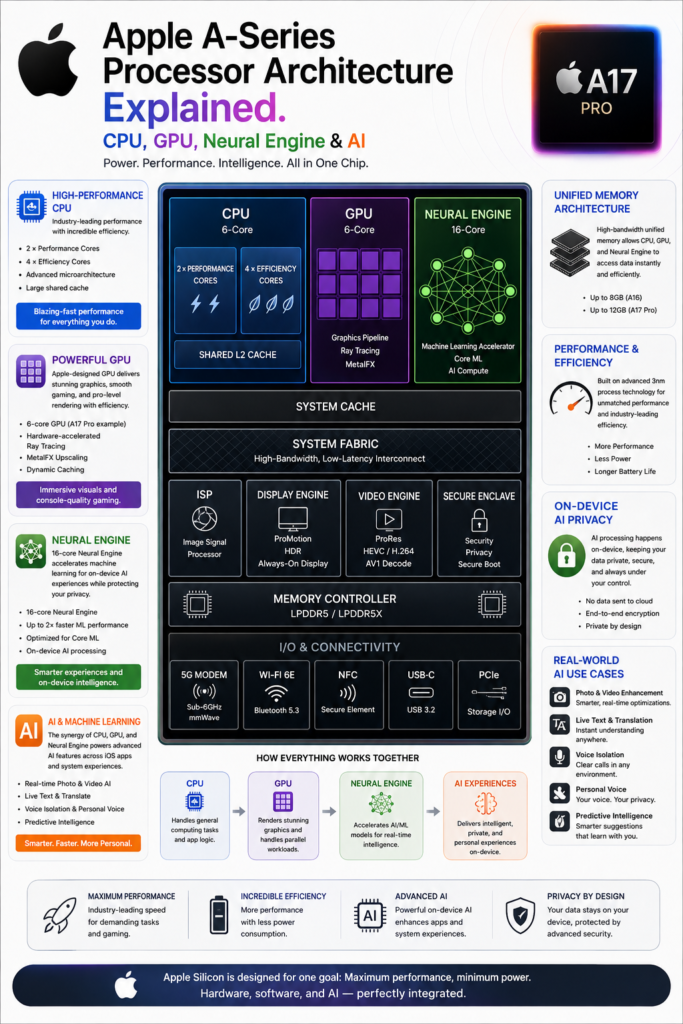
CPU + GPU + Neural Engine + ISP + Media + Security + Memory

Apple A-Series SoC

This integrated approach is one of the defining characteristics of Apple Silicon.

2. Apple A-Series Is More Than a CPU

Calling an A-Series chip an “iPhone processor” is technically incomplete.

The CPU is only one part of the SoC.

A simplified architecture is:

 
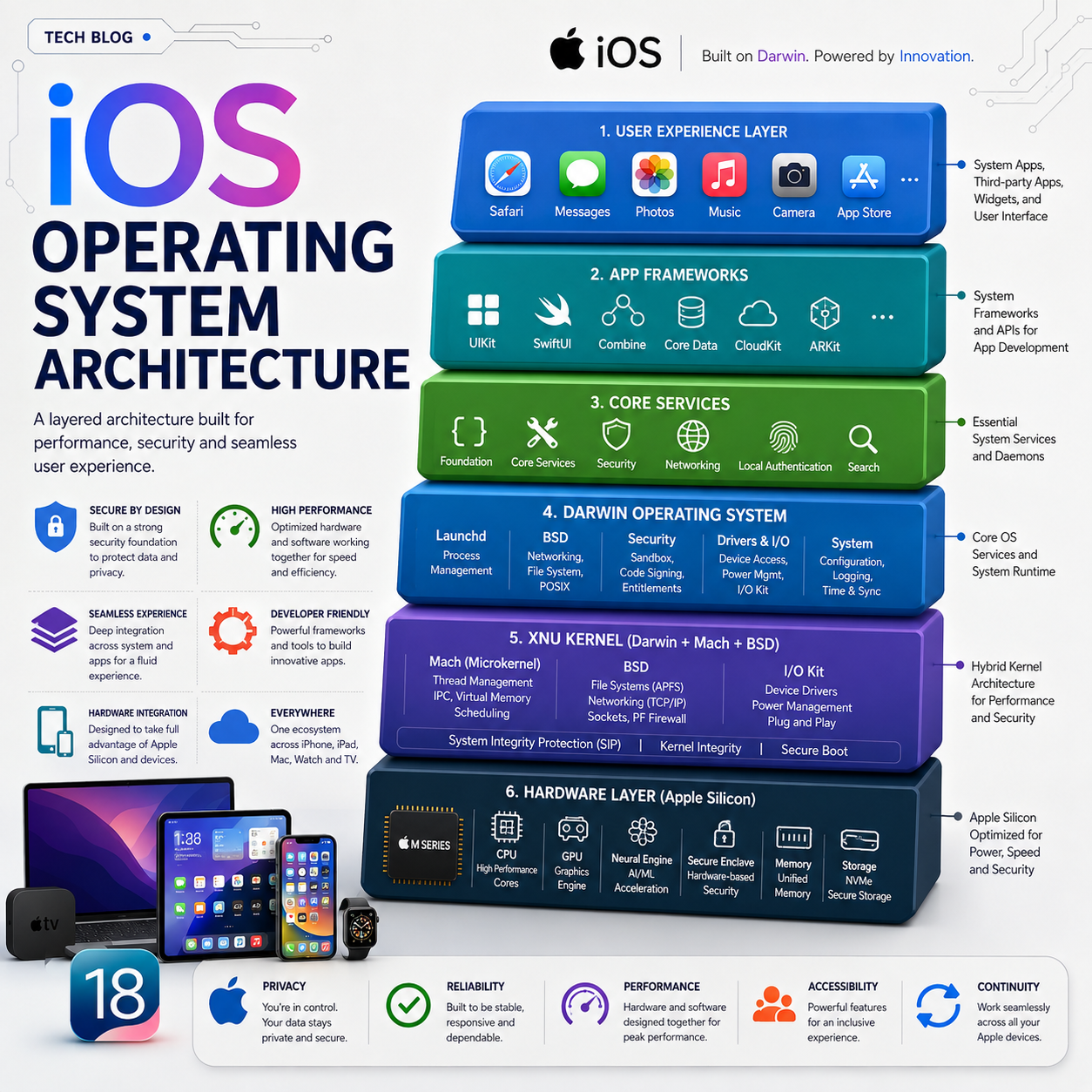
                    iOS / Applications
                           │
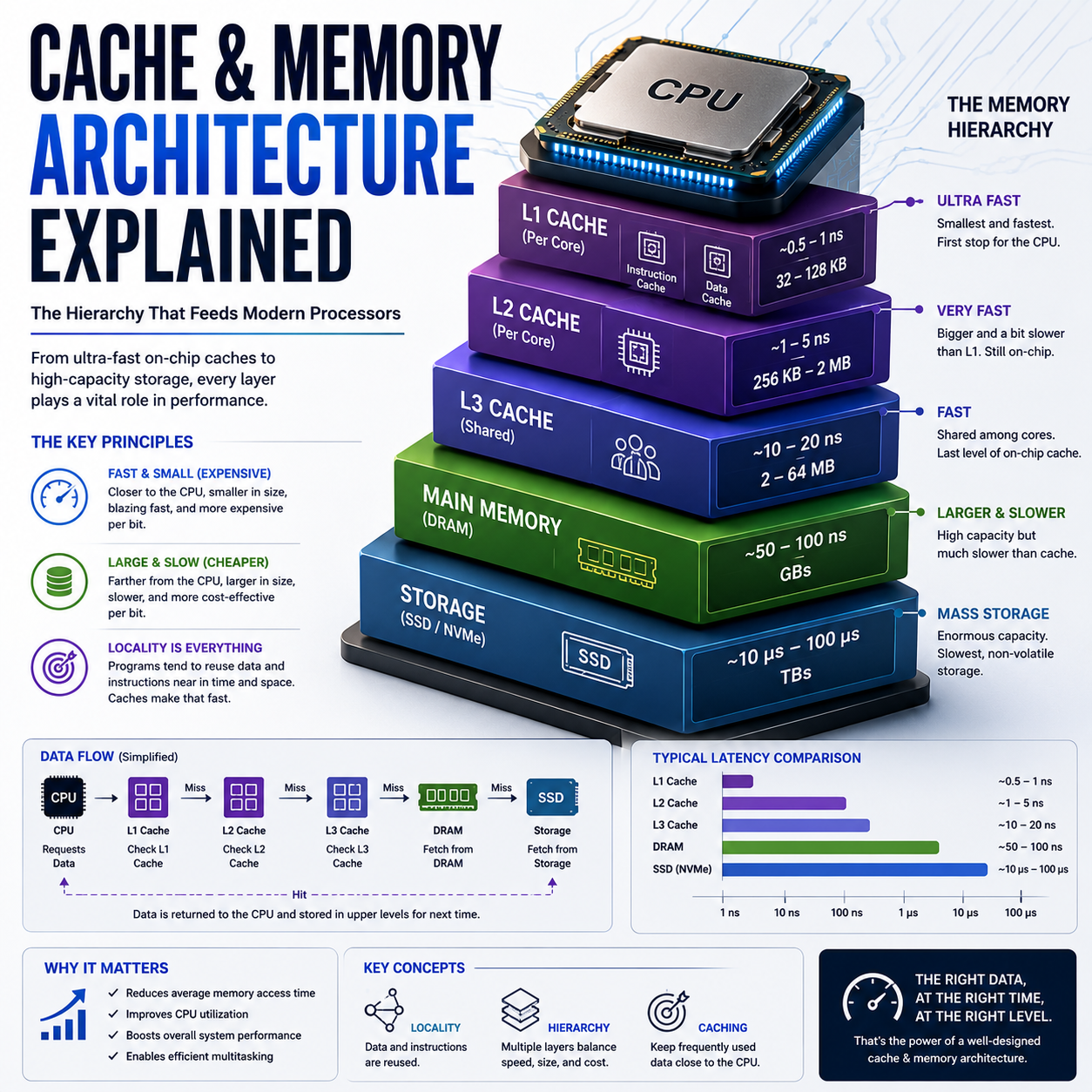
                           ▼
                    Apple Frameworks
                           │
                           ▼
                    Apple A-Series SoC
        ┌──────────────────┼──────────────────┐
        │                  │                  │
        ▼                  ▼                  ▼
      CPU                 GPU          Neural Engine
   General Compute      Graphics            AI
        │                  │                  │
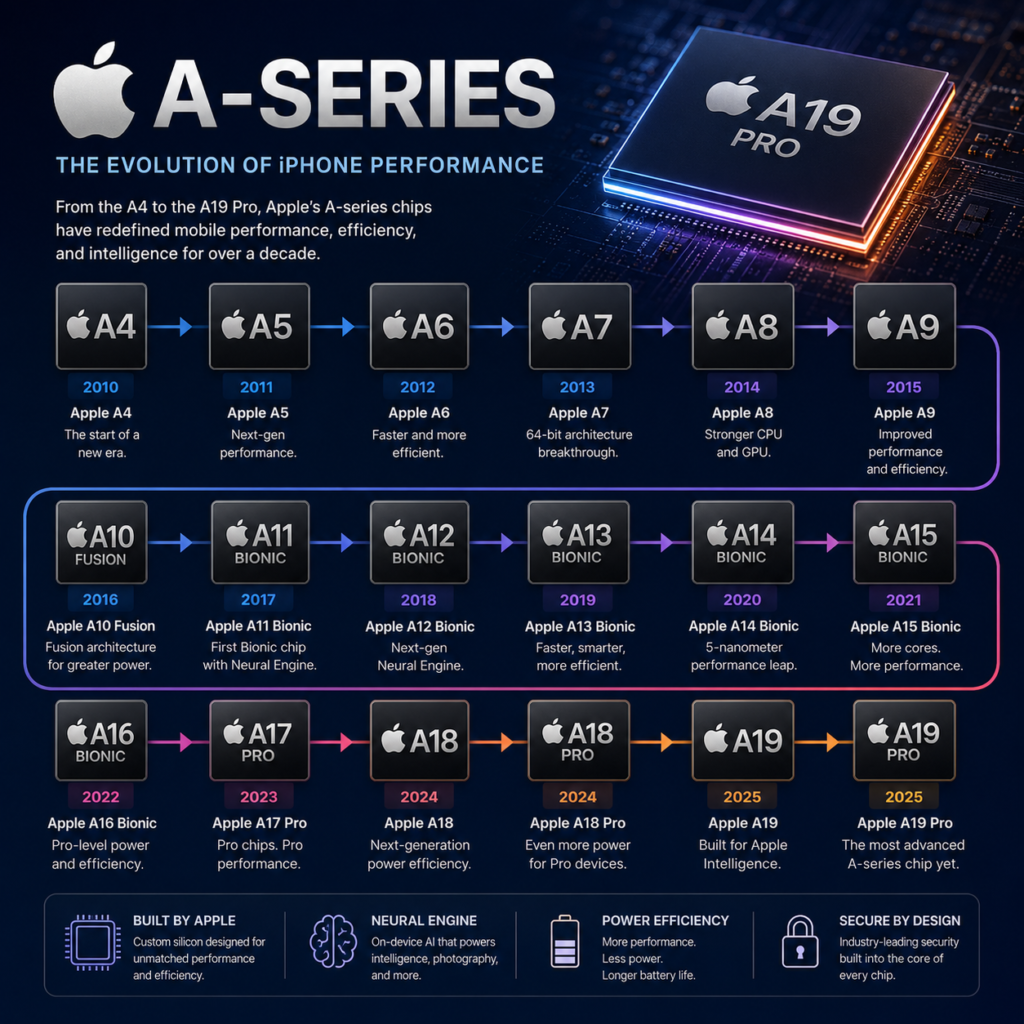
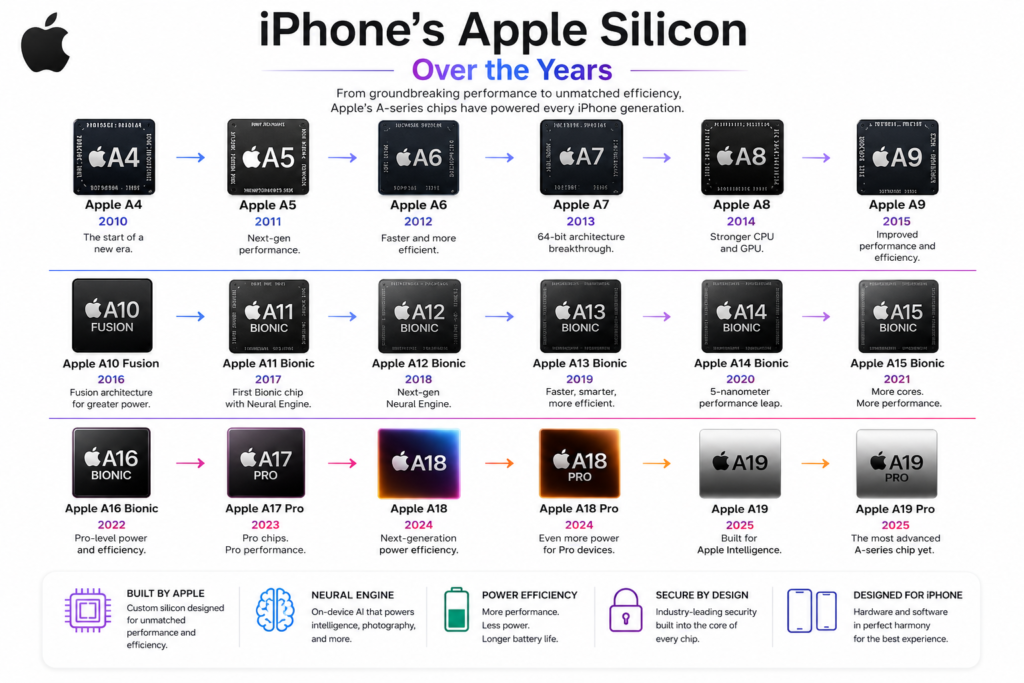
        └──────────────────┼──────────────────┘
                           │
              ┌────────────┼────────────┐
              ▼            ▼            ▼
             ISP       Media Engine   Security
              │            │            │
              └────────────┼────────────┘
                           ▼
                    Unified Memory
 

This is the fundamental architecture behind Apple’s mobile computing platform.

3. Apple’s Vertical Integration

One of Apple’s greatest architectural advantages is its control over multiple layers of the platform.

Apple designs:

  • SoC architecture
  • CPU cores
  • GPU architecture
  • Neural Engine
  • ISP
  • Security architecture
  • Operating system
  • APIs
  • Device hardware

The relationship is therefore:

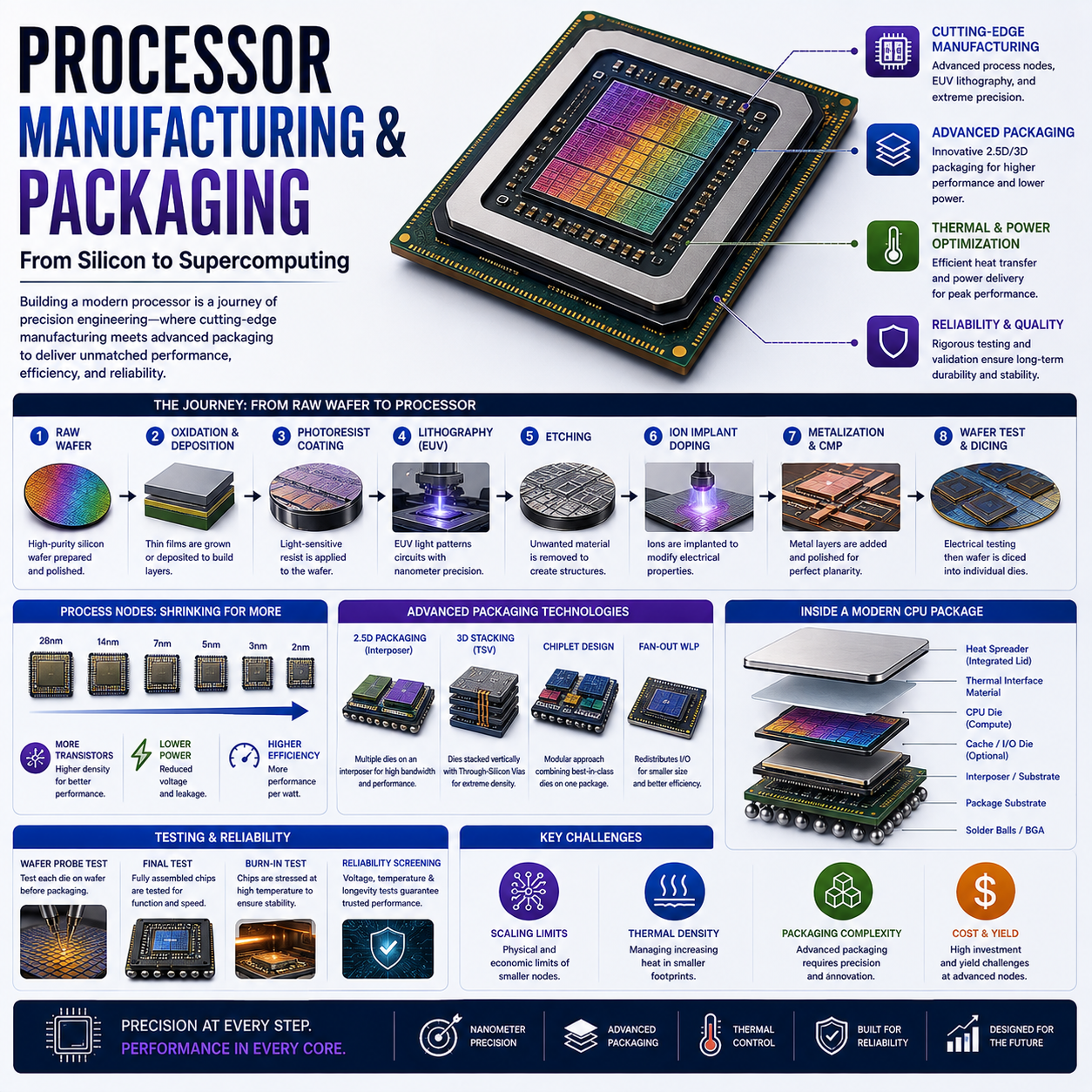
Apple Silicon

iOS / iPadOS / macOS

Apple Hardware

This creates a high degree of hardware-software co-design.

4. Arm Foundation

Apple A-Series processors use the Arm instruction-set architecture.

However, Apple’s CPU cores are not simply standard Arm Cortex cores.

Apple designs its own CPU microarchitectures around the Arm ISA.

This distinction is critical:

Arm provides the instruction-set architecture; Apple designs the CPU implementation.

Therefore:

Arm ISA

Apple CPU Microarchitecture

A-Series Processor

5. Custom CPU Architecture

Apple’s CPU strategy has historically focused on very high single-thread performance combined with efficiency.

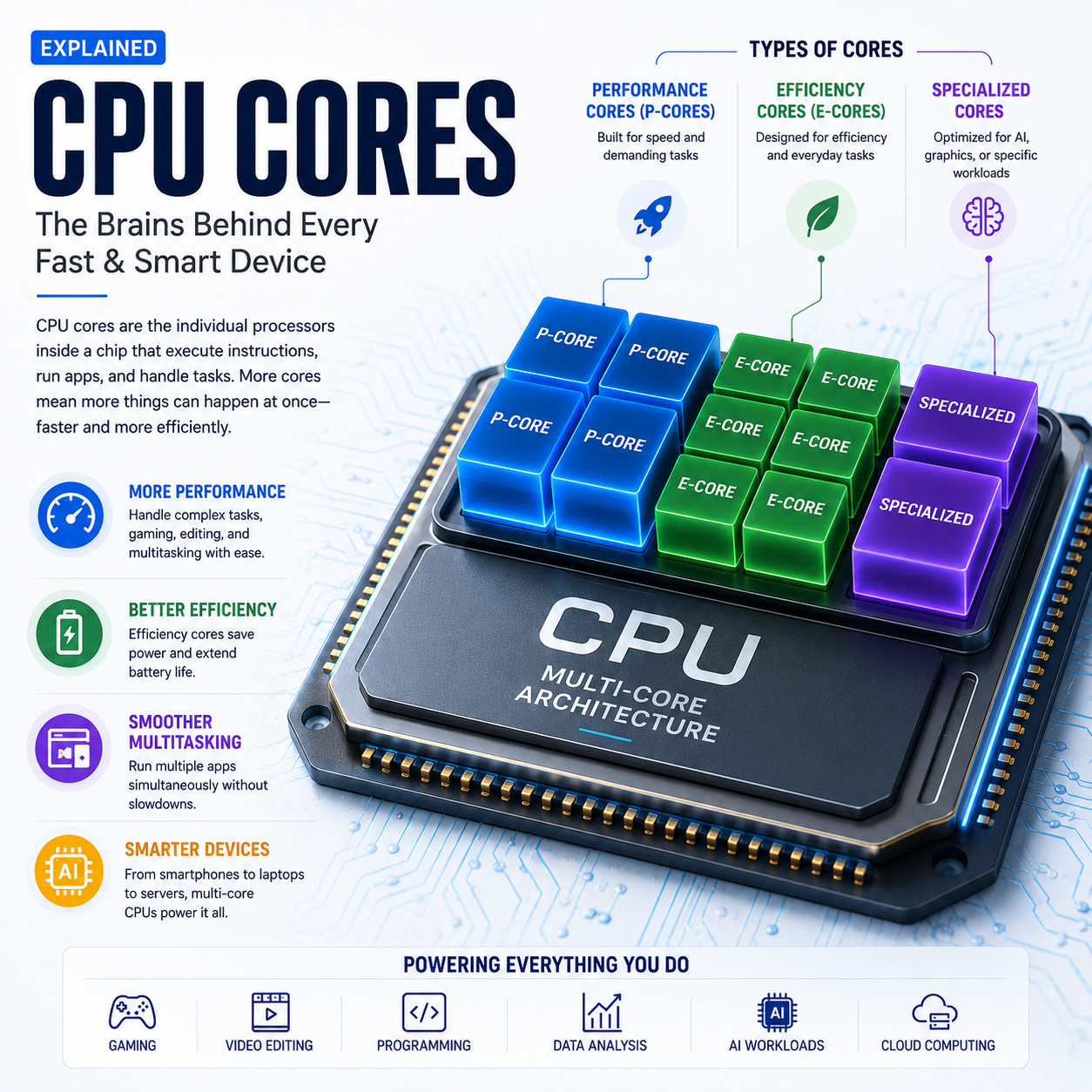
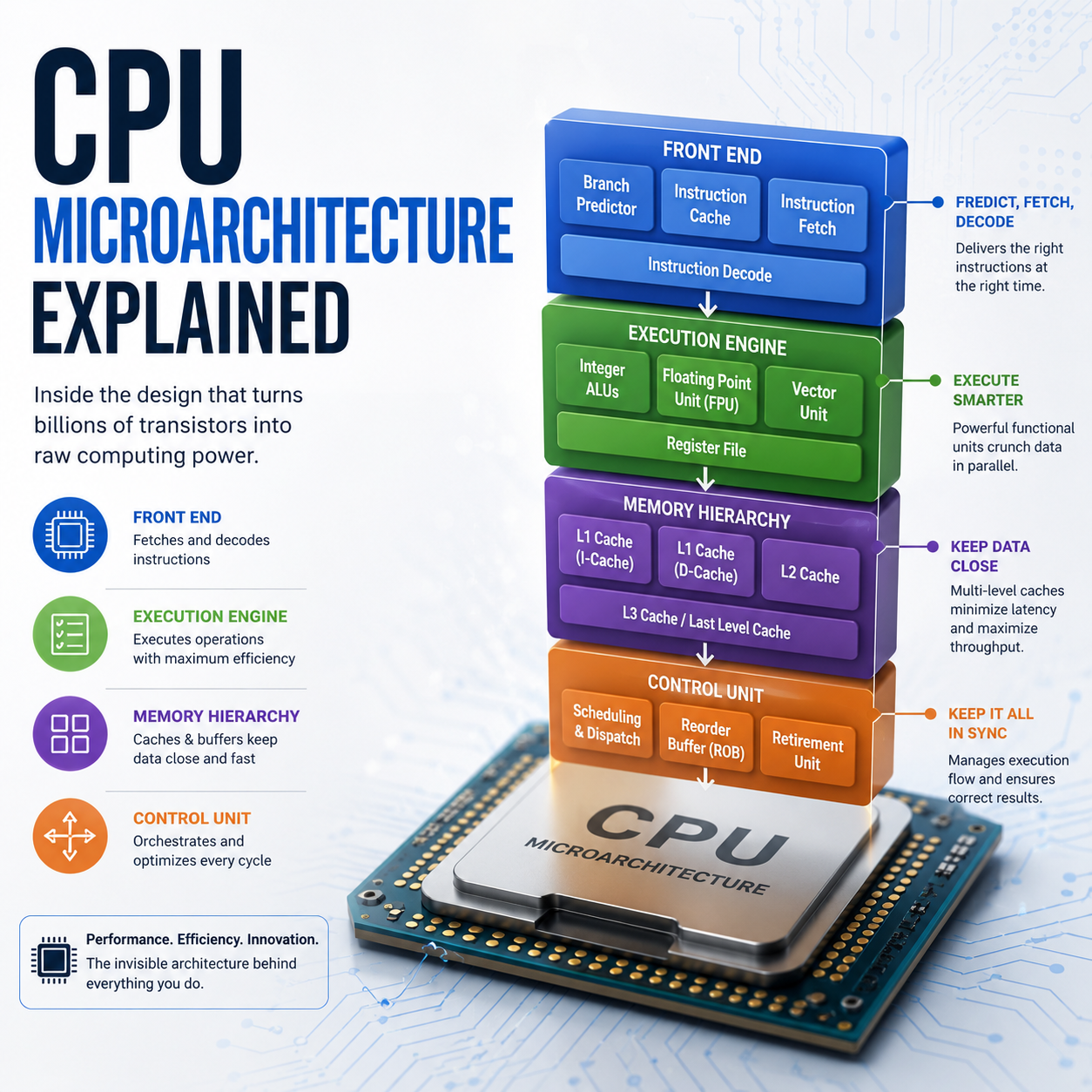
The CPU generally contains two broad classes of cores:

Performance cores

Optimized for demanding workloads.

Efficiency cores

Optimized for lower-power workloads.

This creates a heterogeneous CPU architecture similar in concept to other modern processors, although Apple’s implementation and scheduling approach are proprietary.


6. Performance Cores

Apple’s performance cores are designed for workloads such as:

  • Application execution
  • Gaming
  • Web browsing
  • Video processing
  • Photo editing
  • Complex system tasks

Their architecture emphasizes:

  • High IPC
  • Large execution resources
  • Advanced branch prediction
  • High memory throughput
  • Low latency

This is a major reason iPhones can deliver strong CPU performance despite their relatively small physical form factor.

7. Efficiency Cores

Efficiency cores handle workloads where maximum CPU performance is unnecessary.

Examples include:

  • Background processing
  • System services
  • Synchronization
  • Lightweight applications
  • Low-intensity workloads

This allows Apple to balance:

Performance

with:

Battery efficiency


8. Heterogeneous CPU Architecture

The basic architecture becomes:

Performance Cores

  •  

Efficiency Cores

Apple CPU

The operating system determines how workloads are distributed.

This allows iOS to prioritise:

  • Responsiveness
  • Battery life
  • Performance
  • Thermal behavior

depending on the workload.

9. CPU Microarchitecture

Apple’s CPU cores contain sophisticated structures including:

  • Instruction fetch
  • Branch prediction
  • Instruction decode
  • Execution units
  • Integer pipelines
  • Floating-point units
  • Vector processing
  • Load/store units
  • Registers
  • Cache

CPU performance therefore depends on architecture rather than clock speed alone.

A simplified relationship is:

CPU Performance ≈ IPC × Frequency × Effective Utilization

Apple traditionally achieves strong performance without relying on extremely high clock frequencies.


10. Why Apple CPU Performance Is Important

Apple’s CPU strategy emphasizes high performance per watt.

This is particularly valuable in smartphones because the device is constrained by:

  • Battery capacity
  • Thermal limits
  • Chassis size
  • Cooling capacity

The goal is therefore not simply:

Maximum performance

but:

Maximum useful performance within a mobile power envelope

11. Apple GPU Architecture

Apple designs its own GPU architecture for A-Series processors.

The GPU handles:

  • 3D graphics
  • Gaming
  • Image processing
  • Parallel compute
  • Machine-learning workloads
  • UI rendering

The architecture is tightly integrated with the rest of the SoC.

Application


Graphics API


Apple GPU

├── Rendering
├── Compute
├── Ray Tracing
└── AI-assisted workloads

12. Apple GPU Evolution

Apple’s GPU architecture has evolved substantially across A-Series generations.

Earlier designs focused primarily on:

Mobile graphics

Newer designs increasingly support:

  • Advanced graphics
  • Hardware ray tracing
  • AI acceleration
  • Compute workloads
  • Professional graphics
  • Console-class gaming technologies

This reflects Apple’s broader transformation from smartphone silicon toward general-purpose high-performance computing.


13. Hardware Ray Tracing

Recent Apple GPU architectures include hardware-accelerated ray tracing.

Ray tracing improves:

  • Reflections
  • Shadows
  • Lighting
  • Global illumination effects

The architecture becomes:

Game Engine

Graphics API

Apple GPU

Ray-Tracing Hardware

Rendered Frame

This allows advanced graphical effects while keeping the CPU focused on game logic and system tasks.

14. Dynamic Caching

Apple has also introduced advanced GPU techniques such as Dynamic Caching in newer GPU architectures.

Instead of allocating GPU resources in a rigid manner, resources can be used more dynamically according to workload requirements.

The goal is improved:

  • GPU utilization
  • Efficiency
  • Performance
  • Power consumption

This is an example of Apple’s emphasis on architecture-level optimization rather than simply increasing raw compute resources.


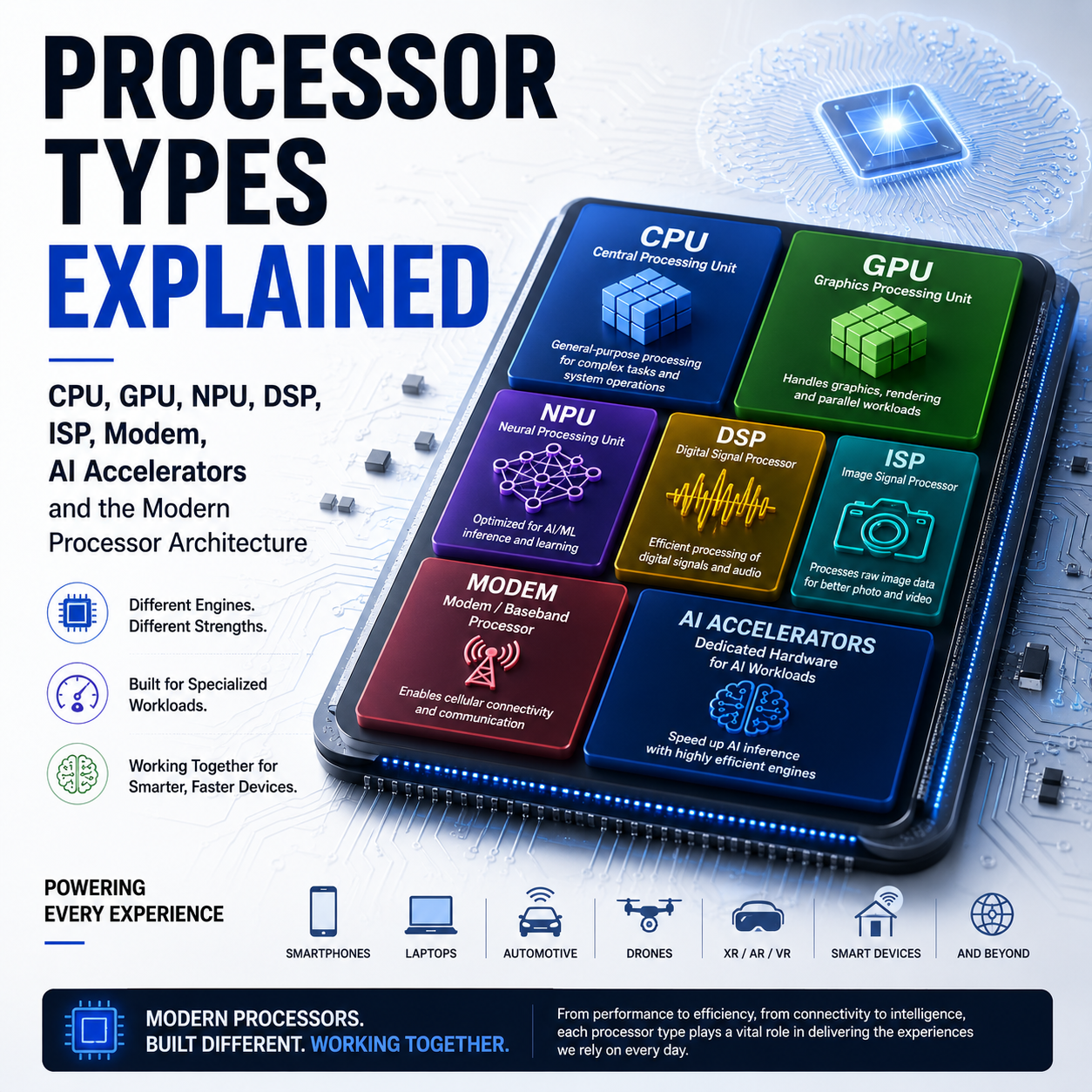
15. Neural Engine

One of the most recognizable components of Apple Silicon is the Neural Engine.

It is a dedicated machine-learning accelerator.

Its purpose is to execute neural-network workloads efficiently.

The architecture is:

AI Application

Apple ML Frameworks

Neural Engine

AI Inference
16. What Does the Neural Engine Do?

The Neural Engine can accelerate workloads involving:

  • Image recognition
  • Speech recognition
  • Computer vision
  • Computational photography
  • Machine learning
  • AI-assisted applications
  • Generative AI features

However, the Neural Engine does not operate alone.

Apple’s AI architecture increasingly distributes workloads across:

CPU

  •  

GPU

  •  

Neural Engine


17. Apple Intelligence and A-Series

Apple’s recent AI strategy has made the Neural Engine increasingly important.

Apple Intelligence uses a combination of:

  • CPU
  • GPU
  • Neural Engine
  • System memory
  • Software frameworks

The architecture can therefore be viewed as:

 
                  Apple Intelligence
                         │
              ┌──────────┼──────────┐
              ▼          ▼          ▼
             CPU        GPU    Neural Engine
              │          │          │
              └──────────┼──────────┘
                         ▼
                    System Memory
 

This is a heterogeneous AI architecture.

18. Neural Engine vs GPU

A common misconception is that the Neural Engine performs all AI processing.

It does not.

Different workloads can be assigned to different engines.

CPU

General-purpose AI operations.

GPU

Large parallel workloads.

Neural Engine

Efficient neural-network operations.

Therefore:

Apple’s AI architecture is a combination of processors, not a single AI chip.


19. Apple Machine-Learning Architecture

Apple’s software stack includes frameworks such as:

  • Core ML
  • Metal
  • Accelerate
  • Vision
  • Speech
  • Foundation Models

These allow applications to access Apple’s hardware accelerators.

The architecture becomes:

Application

Apple Framework

Hardware Abstraction

CPU / GPU / Neural Engine

Memory

This is a classic example of hardware-software co-design.

20. Core ML

Core ML is Apple’s machine-learning framework for running models on Apple devices.

It allows developers to deploy machine-learning models locally.

The architecture is:

AI Model

Core ML

Apple Silicon

CPU / GPU / Neural Engine

Inference
This allows many AI workloads to run directly on the device.

21. On-Device AI

On-device AI has several advantages.

Instead of:

iPhone

Cloud

AI

the device can perform:

iPhone

A-Series

Local AI

Potential advantages include:

  • Lower latency
  • Reduced network dependence
  • Greater privacy for supported workloads
  • Offline functionality
  • Reduced cloud processing

22. Computational Photography

A-Series architecture is particularly important because smartphone photography depends heavily on computation.

The camera pipeline is:

Camera Sensor

ISP

  •  

CPU

  •  

GPU

  •  

Neural Engine

Computational Photography

Final Image

This is why smartphone camera quality cannot be evaluated from sensor megapixels alone.

23. Image Signal Processor

The ISP processes raw data from the camera sensor.

It handles operations such as:

  • Noise reduction
  • Exposure
  • White balance
  • HDR
  • Color processing
  • Autofocus
  • Multi-frame processing

The ISP operates alongside AI hardware.


24. ISP + Neural Engine

Modern computational photography can be represented as:

Camera Sensor

ISP

Image Analysis

Neural Engine

Semantic Understanding

Image Reconstruction

This can support advanced photography features such as:

  • Portrait segmentation
  • Scene recognition
  • Noise reduction
  • HDR
  • Detail reconstruction
  • Face processing

25. Photonic Engine

Apple’s computational photography architecture has evolved through technologies such as the Photonic Engine.

The concept is to combine image data from multiple exposures and computational stages to produce a better final image.

The architecture is fundamentally:

Sensor Data

  •  

ISP

  •  

Machine Learning

  •  

Multiple Frames

Final Photograph

This is one of the clearest examples of specialized silicon directly influencing the user experience.


26. Video Processing

A-Series chips contain dedicated hardware for video processing.

This allows the system to accelerate:

  • Video encoding
  • Video decoding
  • HDR
  • High-resolution video
  • Computational video

Dedicated hardware is significantly more power-efficient than performing every video operation on CPU cores.

27. ProRes and Media Engines

Recent A-Series Pro-class processors include specialized media capabilities designed for advanced video workflows.

These can accelerate:

  • ProRes
  • HEVC
  • H.264
  • High-resolution video
  • Professional video pipelines

This demonstrates how the A-Series architecture is increasingly approaching professional computing territory.


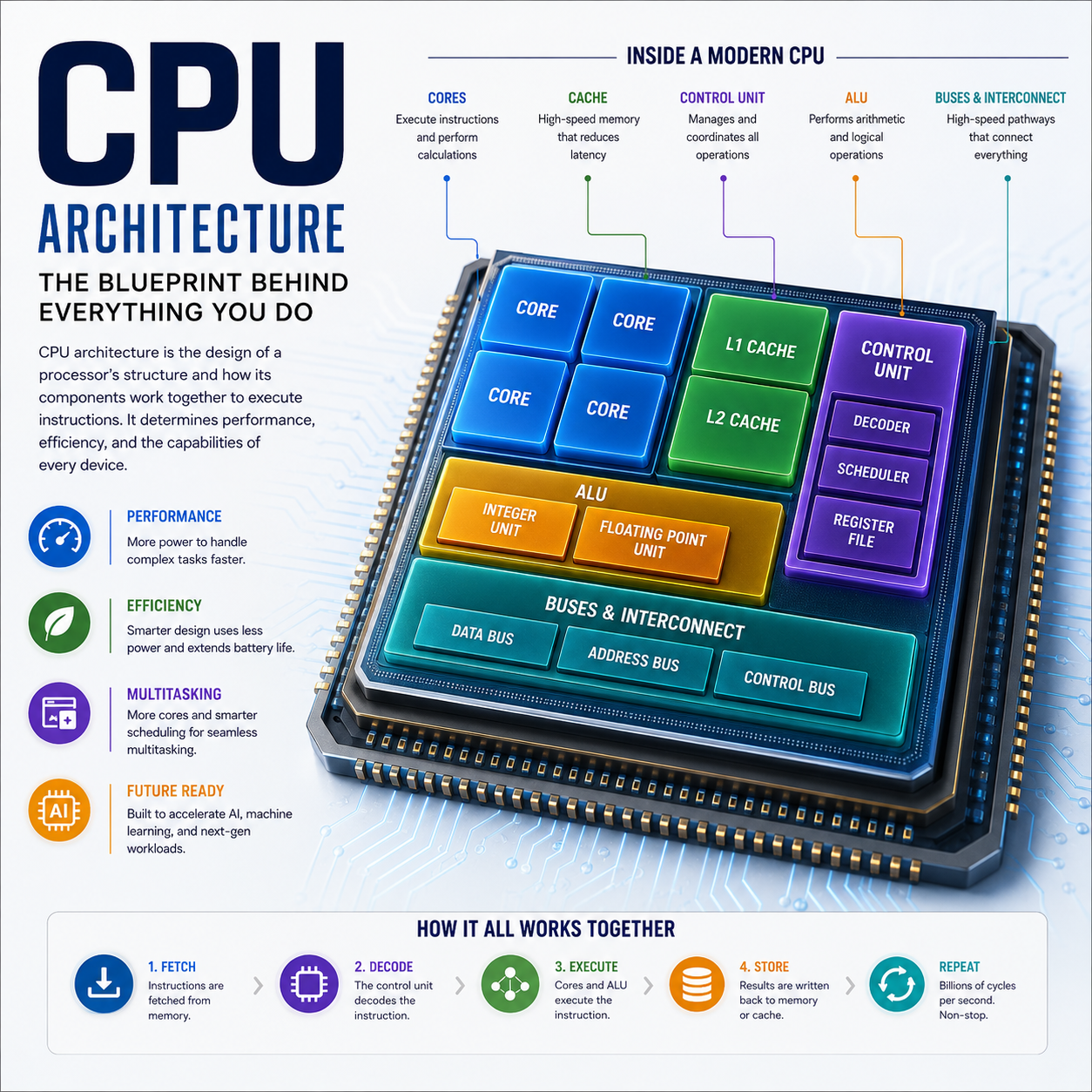
28. Memory Architecture

Apple’s memory architecture is one of its most important differentiators.

A-Series processors use a tightly integrated memory subsystem.

The architecture is broadly:

CPU

  •  

GPU

  •  

Neural Engine

  •  

ISP

Shared System Memory

This allows multiple processing engines to access common data without constantly copying it between separate memory pools.

29. Unified Memory Philosophy

Apple’s unified-memory approach is particularly prominent in its M-Series Mac processors, but the same architectural philosophy is important in understanding A-Series.

Instead of maintaining completely separate memory pools for every accelerator, multiple engines can share access to system memory.

This can reduce:

  • Data duplication
  • Memory movement
  • Latency
  • Power consumption

30. Why Memory Matters for AI

AI models require significant amounts of data.

The pipeline is:

AI Model

Memory

Neural Engine / GPU

Inference
Therefore AI performance depends on:

  • Compute capability
  • Memory bandwidth
  • Memory capacity
  • Cache
  • Software optimization

A fast Neural Engine alone does not guarantee fast AI performance.


31. Secure Enclave

Security is another fundamental part of Apple Silicon.

A-Series processors include a dedicated Secure Enclave subsystem.

It is designed to protect sensitive information such as:

  • Encryption keys
  • Biometric information
  • Device credentials
  • Secure authentication data

The architecture creates a security boundary separate from normal application processing.

32. Secure Boot

Apple’s platform security begins before iOS is fully loaded.

A simplified chain is:

Hardware Root of Trust

Boot ROM

Secure Boot

iOS

Applications

This helps prevent unauthorized software from taking control of the device during the boot process.


33. Face ID and Secure Processing

Biometric authentication depends on cooperation between:

  • Camera system
  • Neural processing
  • Secure Enclave
  • iOS

The security architecture is therefore:

Biometric Sensor

Image / Neural Processing

Secure Authentication

Secure Enclave

This demonstrates how CPU, AI, imaging and security hardware cooperate.

34. Connectivity

A-Series processors operate as part of a broader Apple connectivity platform.

Depending on device and generation, this involves:

  • Cellular modem
  • Wi-Fi
  • Bluetooth
  • Ultra Wideband
  • Other wireless systems

Not every connectivity function is necessarily contained inside the A-Series die itself.

This distinction is important.

SoC architecture

and

complete device architecture

are not identical.


35. Power Management

Power efficiency is one of Apple’s strongest architectural priorities.

The SoC dynamically manages:

  • CPU frequency
  • GPU activity
  • Neural Engine activity
  • Display workload
  • Media engines
  • Background processing

The system continuously balances:

Performance

against:

Power

against:

Temperature

36. Performance per Watt

For smartphones, performance per watt is often more important than absolute performance.

The reason is simple:

Battery

  •  

Small Chassis

  •  

Limited Cooling

create strict thermal constraints.

Apple therefore designs the A-Series around:

Maximum useful performance within a tightly controlled power envelope.


37. Thermal Architecture

The A-Series chip itself is only part of the thermal equation.

Actual performance depends on:

  • Chip efficiency
  • Package
  • Thermal interface
  • Chassis
  • Heat spreader
  • Software power limits
  • Ambient temperature

A processor may have extremely high peak performance but eventually reduce frequency if sustained thermal limits are reached.

38. A-Series and iPhone Architecture

The complete iPhone architecture is:

 
                   APPLICATIONS
                         │
                         ▼
                       iOS
                         │
                Apple Frameworks
                         │
                         ▼
                 ┌───────────────┐
                 │ A-SERIES SoC  │
                 ├───────────────┤
                 │ CPU           │
                 │ GPU           │
                 │ Neural Engine │
                 │ ISP           │
                 │ Media Engine  │
                 │ Security      │
                 └───────┬───────┘
                         │
                    System Memory
                         │
        ┌────────────────┼────────────────┐
        ▼                ▼                ▼
     Cameras          Display         Storage
 

This is the core Apple mobile computing platform.

39. Apple A-Series Generations

The A-Series family has evolved through numerous generations.

A simplified lineage includes:

A4

A5

A6

A7

A8

A9

A10 Fusion

A11 Bionic

A12 Bionic

A13 Bionic

A14 Bionic

A15 Bionic

A16 Bionic

A17 Pro

A18 / A18 Pro

A19 / A19 Pro

Each generation introduced improvements across CPU, GPU, machine learning, image processing, memory and power efficiency.

40. A4: The Beginning of Apple Silicon

The A4 was Apple’s first custom-designed chip under the A-Series branding.

It established the basic philosophy:

Apple-designed silicon

  •  

Apple operating system

  •  

Apple hardware

This became the foundation for Apple’s later silicon strategy.


41. A7: 64-Bit Transition

The A7 was a major milestone because Apple moved the iPhone to a 64-bit Arm architecture.

This was strategically significant.

The transition established:

  • 64-bit application support
  • Larger address space
  • Modern CPU architecture
  • Long-term software compatibility

It also demonstrated Apple’s willingness to drive major architecture changes through the entire platform.

42. A10 Fusion

A10 Fusion introduced a more explicit heterogeneous CPU configuration.

The processor combined:

High-performance cores

  •  

High-efficiency cores

This reinforced Apple’s emphasis on balancing performance with power consumption.


43. A11 Bionic

A11 introduced an even more sophisticated architecture with:

  • Six CPU cores
  • Performance and efficiency cores
  • Apple-designed GPU
  • Neural Engine

This was an important transition toward increasingly heterogeneous Apple silicon.


44. A12 Bionic

A12 moved Apple to a 7nm manufacturing process and continued increasing:

  • CPU performance
  • GPU performance
  • Machine-learning capability
  • Power efficiency

The Neural Engine became increasingly important to Apple’s mobile AI strategy.


45. A13 Bionic

A13 continued Apple’s emphasis on performance per watt.

The chip delivered substantial improvements across:

  • CPU
  • GPU
  • Machine learning
  • Power efficiency

This generation reinforced the architectural strategy that made Apple Silicon particularly competitive.

46. A14 Bionic

A14 represented another major process transition with 5nm manufacturing.

The architecture emphasized:

  • CPU performance
  • GPU performance
  • Neural Engine
  • Machine learning
  • Power efficiency

This generation also provided the architectural foundation for Apple’s later transition toward the M-Series.


47. A15 Bionic

A15 further increased:

  • CPU performance
  • GPU capability
  • Neural Engine performance
  • Video processing
  • Power efficiency

The architecture increasingly resembled a miniature general-purpose computing platform rather than a traditional smartphone processor.


48. A16 Bionic

A16 continued the performance-per-watt strategy and introduced architectural improvements across:

  • CPU
  • GPU
  • Neural Engine
  • ISP

The ISP and computational photography pipeline became increasingly important as smartphone cameras became more sophisticated.


49. A17 Pro

A17 Pro was a particularly important generation.

It introduced Apple’s first 3nm smartphone processor and added hardware-accelerated ray tracing to the GPU.

This marked a major shift toward:

Console-class graphics

within a smartphone platform.

50. A18 and A18 Pro

The A18 generation continued Apple’s emphasis on:

  • CPU performance
  • GPU
  • Neural Engine
  • AI
  • Camera processing
  • Power efficiency

It also became increasingly relevant to Apple’s Apple Intelligence strategy.


51. A19 and A19 Pro

The current A19 generation continues the architectural transition toward AI-centric mobile computing.

Apple’s A19 Pro uses a:

  • 6-core CPU
  • 6-core GPU
  • 16-core Neural Engine

and adds Neural Accelerators to the GPU for more efficient on-device AI processing.

This is particularly significant because AI acceleration is increasingly distributed across multiple parts of the SoC rather than isolated in the Neural Engine.

52. A-Series and Apple Intelligence

Apple Intelligence changes the requirements placed on mobile silicon.

The processor must now handle:

  • Generative AI
  • Language models
  • Image generation
  • Writing assistance
  • Speech
  • Vision
  • Personal context processing

This requires:

CPU

  •  

GPU

  •  

Neural Engine

  •  

Memory

  •  

Software

The result is a complete AI computing platform.


53. GPU Neural Accelerators

One of the important developments in Apple’s latest architecture is the integration of Neural Accelerators into the GPU on the A19 Pro.

This creates a more distributed AI architecture.

Instead of:

Neural Engine = AI

the model becomes:

Neural Engine + GPU Neural Accelerators + CPU

This is an important evolution in Apple Silicon architecture.

54. Apple A-Series vs Qualcomm Snapdragon

This is one of the most important mobile processor comparisons.

ComponentApple A-SeriesQualcomm Snapdragon
CPUApple custom ArmArm / Qualcomm architecture
GPUApple GPUAdreno
AINeural Engine + other acceleratorsHexagon / AI Engine
ISPApple ISPSpectra
OSiOSAndroid / other
IntegrationVery highBroad OEM ecosystem
ModemDevice/platform dependentQualcomm modem ecosystem
SoftwareApple-controlledOEM + Google + Qualcomm
ManufacturingExternal foundryExternal foundry

The key distinction is:

Apple controls the complete vertical stack.

55. Apple A-Series vs Samsung Exynos

Both are Arm-based mobile SoCs.

Apple

Custom CPU + custom GPU + Neural Engine + Apple software

Exynos

Arm CPU + Xclipse/other GPU + NPU + Samsung software ecosystem

The key architectural difference is the degree of hardware/software integration and platform control.

56. Apple A-Series vs MediaTek Dimensity

Both target mobile devices, but their ecosystems are different.

Apple

One company controls:

Silicon + OS + hardware

MediaTek

Primarily provides:

Silicon platform

to many smartphone manufacturers.

This gives Apple much tighter control over optimization.


57. Apple A-Series vs Google Tensor

This is an especially interesting comparison.

Apple A-Series

Strong emphasis on:

  • CPU performance
  • GPU
  • AI
  • Efficiency
  • Vertical integration
Google Tensor

Strong emphasis on:

  • AI
  • Computational photography
  • Google software
  • Pixel-specific workloads

Both demonstrate different approaches to AI-first mobile silicon.

58. Apple A-Series vs Intel Core

These processors target different primary environments.

Apple A-Series

Mobile SoC

Intel Core

PC processor

But their architectures are converging conceptually.

Both increasingly contain:

  • CPU
  • GPU
  • AI acceleration
  • Media engines
  • Security
  • Memory systems

This demonstrates the broader transformation from CPUs to heterogeneous computing platforms.


59. Apple A-Series vs AMD Ryzen

The comparison is particularly interesting because both companies use custom Arm/x86 strategies respectively.

Apple

Arm ISA

  •  

Apple custom CPU

  •  

Apple GPU

  •  

Neural Engine

AMD

x86-64 ISA

  •  

Zen CPU

  •  

Radeon GPU

  •  

XDNA NPU on Ryzen AI

Both are moving toward:

CPU + GPU + AI

but through fundamentally different architectures.

60. Benchmarking A-Series

A proper A-Series evaluation should separate:

CPU
  • Single-core
  • Multi-core
  • IPC
  • Sustained performance
GPU
  • Rasterization
  • Ray tracing
  • Compute
AI
  • Neural Engine
  • GPU AI
  • CPU AI
Camera
  • ISP
  • Computational photography
Video
  • Encoding
  • Decoding
  • Pro workflows
Efficiency
  • Performance per watt

This produces a much more meaningful analysis than a single benchmark score.


61. Why A-Series Performance Is Different Across iPhones

The same generation of Apple silicon can perform differently across devices.

Factors include:

  • Thermal design
  • Chassis size
  • Cooling
  • Battery
  • Power limits
  • Software
  • Sustained workload

Therefore:

A19 Pro performance

is not necessarily identical across every product using it.

The device remains part of the performance equation.

62. Apple Silicon Manufacturing

Apple designs its own silicon but does not fabricate the chips itself.

Apple works with external semiconductor foundries, most notably TSMC, for leading-edge A-Series manufacturing.

This creates:

Apple Architecture

TSMC Manufacturing Process

Apple Silicon

The manufacturing process affects:

  • Density
  • Power
  • Performance
  • Thermal behavior
  • Die size

63. Process Node Evolution

A-Series has moved through increasingly advanced process technologies:

20nm

16nm

10nm

7nm

5nm

4nm-class

3nm

The exact node naming differs by generation and manufacturing process.

The larger trend is:

More transistor capability within a similar or smaller power envelope.

64. Advanced Packaging

Modern semiconductor performance increasingly depends on packaging.

Packaging determines:

  • Thermal transfer
  • Memory integration
  • Interconnects
  • Physical density

Apple’s SoC architecture relies heavily on close integration between:

Compute

  •  

Memory

  •  

Package

  •  

Thermal System

This becomes particularly important as AI workloads grow.


65. A-Series Architecture in One Diagram

 
                         iOS
                          │
                          ▼
                  Apple Frameworks
                          │
        ┌─────────────────┴─────────────────┐
        │           APPLE A-SERIES          │
        │                                   │
        │  ┌─────────┐      ┌────────────┐  │
        │  │   CPU   │      │    GPU     │  │
        │  │ P + E   │      │ Apple GPU  │  │
        │  └─────────┘      └────────────┘  │
        │        │                 │         │
        │        └────────┬────────┘         │
        │                 ▼                  │
        │        ┌────────────────┐          │
        │        │ Neural Engine  │          │
        │        │      + AI      │          │
        │        └────────────────┘          │
        │                 │                  │
        │   ┌─────────────┼─────────────┐    │
        │   ▼             ▼             ▼    │
        │  ISP       Media Engine   Security │
        │   │             │             │    │
        └───┼─────────────┼─────────────┼────┘
            │             │             │
            └─────────────┼─────────────┘
                          ▼
                    System Memory
                          │
              ┌───────────┼───────────┐
              ▼           ▼           ▼
           Camera      Display     Storage

66. The Apple Silicon Philosophy

The A-Series architecture can be summarized as:

Custom CPU

  •  

Custom GPU

  •  

Neural Engine

  •  

ISP

  •  

Media Engines

  •  

Security

  •  

Memory

  •  

Apple Software

Integrated Computing Platform

This is Apple’s fundamental silicon strategy.


67. Why Apple’s Approach Is Different

The key advantage is vertical integration.

Apple can optimize:

CPU

for:

iOS

while simultaneously optimizing:

GPU

for:

Metal

and:

Neural Engine

for:

Core ML / Apple Intelligence

and:

ISP

for:

iPhone Camera

This creates a highly coordinated hardware/software system.

68. From Smartphone Processor to Personal Intelligence
The A-Series is now moving toward a broader role.

The traditional smartphone processor was responsible for:

Running Applications

The modern A-Series is responsible for:

  • Running applications
  • Processing images
  • Rendering graphics
  • Processing video
  • Running AI
  • Protecting data
  • Managing sensors
  • Managing power

The future is increasingly:

Personal computing + personal intelligence on the device.

69. Future of A-Series

The next stage of A-Series development will likely emphasize:

AI

More on-device intelligence.

GPU AI

Greater AI acceleration within graphics hardware.

Neural Engine

Higher AI throughput and efficiency.

Memory

Higher bandwidth and capacity.

Graphics

More advanced ray tracing and compute.

Efficiency

Greater performance per watt.

Hardware/software co-design

Closer integration between silicon and Apple’s AI frameworks.

70. The Future Apple Mobile SoC

The future architecture is likely to look increasingly like:

 
                APPLE INTELLIGENCE
                       │
              ┌────────┼────────┐
              ▼        ▼        ▼
             CPU      GPU    NEURAL ENGINE
              │        │        │
              └────────┼────────┘
                       ▼
                SHARED MEMORY
                       │
        ┌──────────────┼──────────────┐
        ▼              ▼              ▼
       ISP        MEDIA ENGINE     SECURITY
        │              │              │
        └──────────────┼──────────────┘
                       ▼
                  DEVICE SYSTEM
 

The smartphone becomes an increasingly capable local AI computer.

Final Assessment

Apple A-Series is best understood not as an iPhone CPU, but as a highly integrated Apple-designed mobile computing platform.

Its defining architectural elements are:

Custom Arm CPU

→ General computing

Apple GPU

→ Graphics and parallel compute

Neural Engine

→ Machine learning

GPU Neural Accelerators

→ Emerging AI workloads

ISP

→ Computational photography

Media Engines

→ Video

Secure Enclave

→ Security

Shared Memory

→ Data movement

Power Management

→ Efficiency

Together they create:

Apple Silicon for mobile computing.

The evolution is particularly significant:

A4

Custom Apple Silicon

64-bit A7

Heterogeneous CPU

Neural Engine

Advanced GPU

Hardware Ray Tracing

On-device AI

Apple Intelligence

AI-centric Apple Silicon

The A19 Pro illustrates where this architecture is heading: Apple now combines a multi-core CPU, GPU with Neural Accelerators, and a 16-core Neural Engine to distribute AI workloads across multiple specialized engines.

That is the larger significance of A-Series.

It is not simply about making the next iPhone faster.

It is about designing a complete computing architecture in silicon, tightly coordinated with Apple’s operating systems, applications, cameras, security systems and AI frameworks.